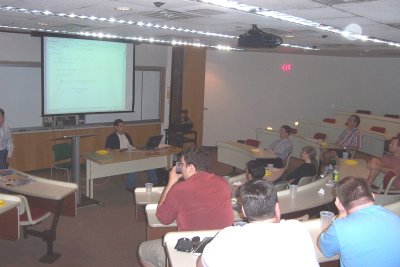
 | Vermont.Net’s August meeting featured a fantastic presentation on Multi-Threaded Applications in .NET by local .Net plumber, Ali Aghareza. Ali has a weblog, by the way where he posts some awesome tidbits. Although threading is a very complex topic, Ali knows it inside and out. This was his very first time presenting, but because he knew the topic so well,the presentation and demos and his ability to answer any question, was fantastic. |
I think one of the most valuable parts of this presentation was that Ali explained some of the areas where you couldl really get yourself in trouble if you didn’t know what you were doing and showed some demos of the funny effects that could be had by what seemed like reasonable coding.
We also learned a few cool tidbits. Ever notice that EVERY single class, method and function in the .NET Reference starts off with a sentence about thread safety? Ever pay any attention to that? If you are manually doing threading, you definitely should! We learned about background threading, safepoints and how the machine is involved with this whole process.
It was definitely fascinating – impressive to watch him do all the coding on the fly as well – and I was so impressed by the talk, that I have recommended that he do this at Code Camp II!
We will put his slides up on the user group website soon. Go to the VTdotNET site’s Past Meetings page to get his powerpoint deck.
A couple of notable points about this meeting. Although it was on one of the very rare NICE nights we have had this summer, there were still 20 people there (I was surprised) and more impressively there were 5 totally new people that had never come to a VTdotNET meeting before!
Next month (Sept 20th) Michele Leroux Bustamante is coming as part of a northeast tour thanks to INETA. She will be talking about HTTP Handlers in ASP.NET. I saw part of this talk on a webcast she did during ASP.NET Week on the MSDN Webcasts, but had to cut out early. So that will be 2 plumbers in a row at Vermont.NET. Very nice.
(wierd format of this post is because I can’t left align images. When I do, they don’t appear.. so I used a table, but that’s all goofy too)